
Webwright vs Playwright: A Deep Technical Comparison (Not Just Hype)
Playwright executes scripts. Webwright interprets intent. A deep dive into the real engineering differences behind AI-driven testing tools.

Deep Technical Comparison: Webwright vs Playwright
Below is a more engineering-focused breakdown based on actual usage patterns.
🔬 Execution Model (How tests actually run)
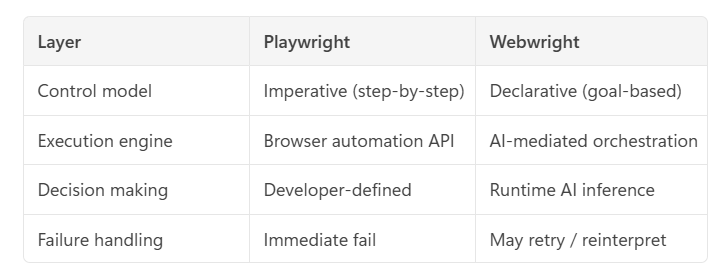
🧩 Selector & DOM Handling
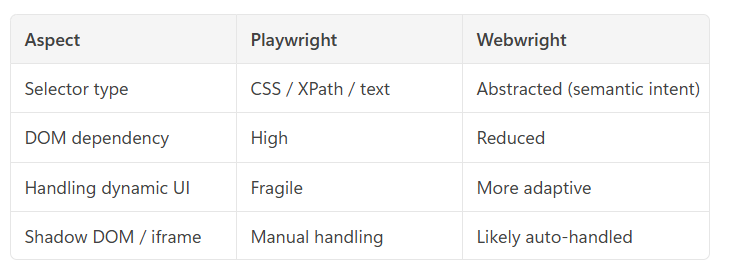
Example comparison
Playwright (explicit DOM dependency)
await page.locator(’#wp-admin-bar-site-name > a’).click();
Webwright (intent-driven)
Open the site dashboard from the admin bar
👉 You remove:
CSS hierarchy dependency
breakpoints from UI changes
🔁 State Management & Context Passing
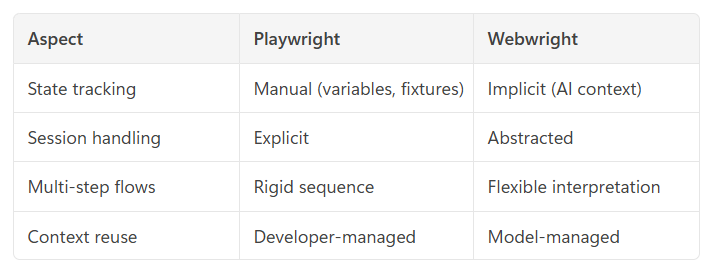
Why this affects tokens
Playwright → you re-send context every time
Webwright → system already understands flow
👉 Less repetition = fewer tokens
🧠 Error Handling & Debugging
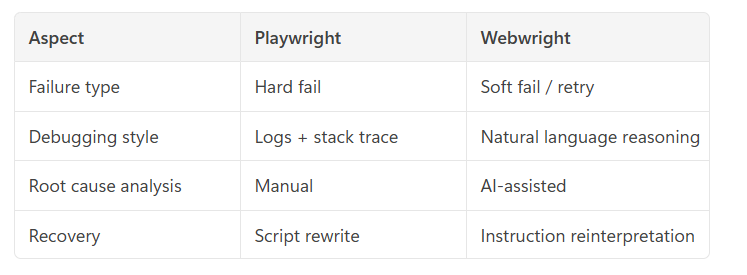
Real impact
With Playwright:
Error: locator not found
You:
inspect DOM
update selector
rerun
With Webwright:
“Login failed — try alternative button”
👉 It may recover without your intervention
⚙️ CI/CD & Determinism
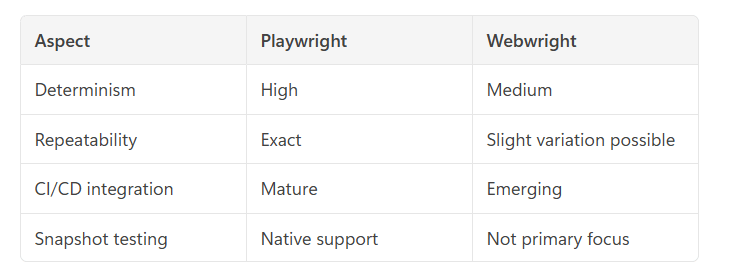
👉 Key insight:
Playwright = reliable pipelines
Webwright = adaptive workflows
📦 Code Footprint & Maintainability
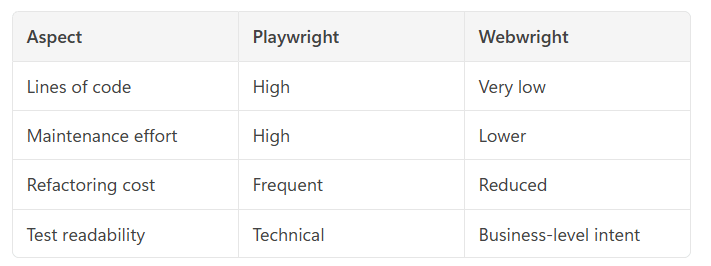
Example
Playwright test = implementation-level
Webwright test = business requirement
🧮 Token Economics (Deeper Breakdown)
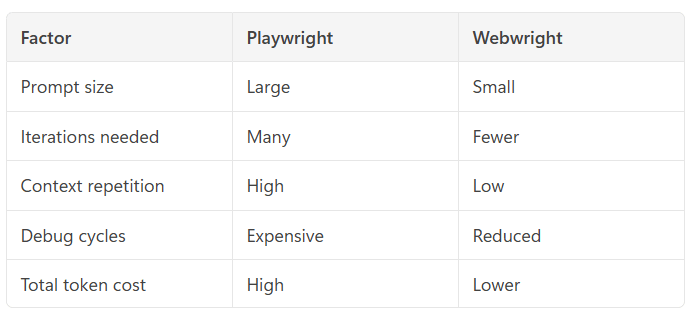
Hidden token cost factors (Playwright)
Full script pasted into Claude
Error logs + trace
HTML snippets
Repeated explanation of test intent
Hidden savings (Webwright)
Intent replaces code
Less need for logs
Fewer clarification prompts
🔍 Observability & Transparency Trade-off
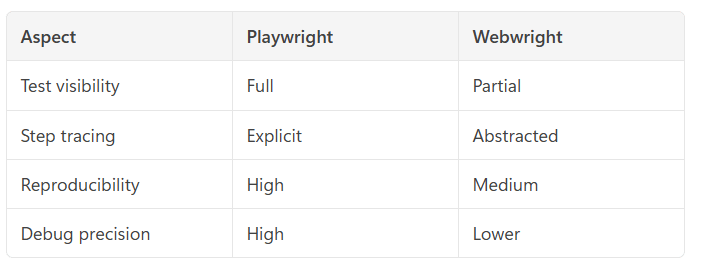
👉 This is the core trade-off:
Playwright = you see everything
Webwright = you trust the system more
🧭 Conclusion
The real difference is not “Playwright vs Webwright.”
It’s deterministic automation vs probabilistic execution.